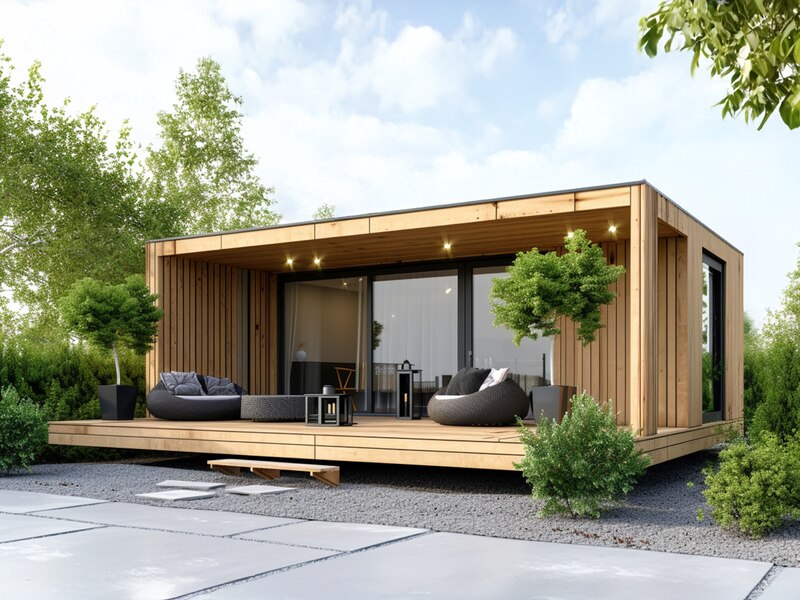
Tiny Houses: Trend or Real Housing Solution in Luxembourg?
September 15, 2025
A clear definition and an evolving framework
A Tiny House – or “light dwelling” – is a movable, non-masonry construction consisting of a single housing unit with a gross floor area of less than 50 m². In May 2023, the government published a toolbox to help municipalities adapt their urban planning regulations to this new form of housing (link to the official toolbox).
Some cities are already taking the step, such as Dudelange, which now allows the installation of Tiny Houses in certain residential areas. Since this is still a relatively new regulation, there may be some local uncertainties as municipalities take time to fully adopt these new rules.
Why are they attractive?
Tiny Houses offer a potential response to several challenges:
- Financial accessibility: with lower installation and utility costs, they are often more affordable than a traditional apartment.
- Ecology and simplicity: less space, lower energy use, and sometimes more sustainable materials.
- Minimalist lifestyle: they appeal to those who want to prioritise essentials and reduce their possessions.
- Flexibility: quicker to build, they can be set up on vacant plots or land awaiting larger projects.
Current limitations
While Tiny Houses generate strong interest, their integration in Luxembourg is still in a learning phase. The regulations are recent and not all municipalities have harmonised their rules yet, which can lead to local differences.
Another challenge concerns land servicing: to be habitable in the long term, these homes need access to water, electricity and sewage networks. This can increase costs or delay implementation.
The issue of permanent use is also evolving: some municipalities accept Tiny Houses as primary residences, others rather as temporary or secondary housing. Finally, while the total price may seem attractive, the price per m² can remain high, especially for well-equipped or eco-friendly models.
In short, these are not definitive barriers but rather points of attention for future residents and for municipalities wishing to encourage this type of housing.
For whom and in which cases?
Tiny Houses are particularly suitable for certain profiles and situations:
- Young professionals and students: offering a more affordable and functional option, often close to workplaces or universities.
- People in transition: expatriates, couples separating or professionals in mobility may see them as a flexible option while they stabilise.
- Eco-conscious minimalists: living in a smaller space means reducing energy consumption, favouring sustainable materials and rethinking the role of possessions.
- Municipalities and developers: introducing Tiny Houses can be a smart way to use vacant plots and expand the housing offer without major construction projects.
These homes are not just an “alternative niche” but a varied response to real needs, ranging from student housing to eco-responsible living.
A trend to follow closely
While Tiny Houses are not a miracle solution, they represent a promising complementary option. With better regulatory harmonisation and well-designed projects, they could help diversify the residential landscape in Luxembourg.
In Luxembourg, it may still be too early to call them a lasting revolution. But Tiny Houses are certainly more than just a passing trend: they reflect a growing desire to rethink housing, combining simplicity, flexibility and sustainability. As legal frameworks become clearer and local initiatives multiply, they could well become a stable component of Luxembourg’s housing landscape in the years to come.